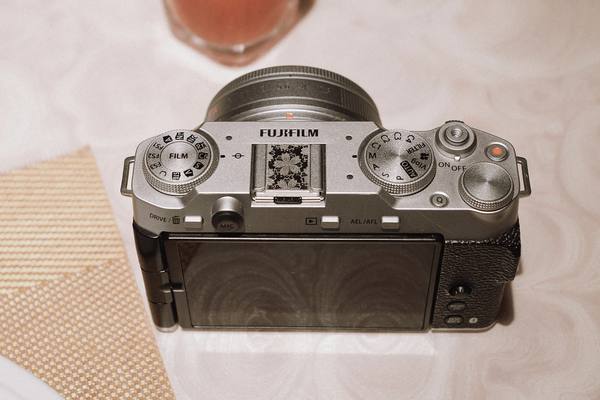
The Fujifilm X-T30 II and Fujifilm X-M5 are Fujifilm APS-C bodies from different lines — the X-T and the X-M. The X-M5 is the newer of the two, arriving in 2024. At launch the X-T30 II was 899 USD and the X-M5 799 USD, making the X-M5 the more affordable of the two.
On paper the X-T30 II is the stronger body of the two. It gives you a 2.36M-dot electronic viewfinder and 380-shot battery life.
The X-M5 isn't far behind. It hits back with AI subject-detection AF, 6K/30p video, and a lighter 355g body.
So which one? If you want a 2.36M-dot electronic viewfinder, get the X-T30 II. If AI subject-detection AF is closer to what you actually need, the X-M5 is the smarter buy. And the X-M5 costs less — 799 USD at launch.
Where the X-T30 II wins
+a 2.36M-dot electronic viewfinder
+380-shot battery life
Where the X-M5 wins
+AI subject-detection AF
+6K/30p video
+a lighter 355g body
Who should buy the X-T30 II or X-M5?
Buy the X-T30 II if…
Pick the X-T30 II if a 2.36M-dot electronic viewfinder, 380-shot battery life matters to you. It is the better fit for buyers who already lean toward X-T handling. Read the full X-T30 II review for the use-case-specific pros and cons.
Buy the X-M5 if…
Pick the X-M5 if AI subject-detection AF, 6K/30p video matters to you. It also launched cheaper at 799 USD. It is the better fit for buyers who already lean toward X-M handling. Read the full X-M5 review for the use-case-specific pros and cons.
X-T30 II vs X-M5: pros and cons
Fujifilm X-T30 II
Fujifilm X-M5
+Lightest current Fuji at 378g
+26MP X-Trans IV sensor shared with X-T3/4
+425-point AF with face and eye detect
+Real budget entry at 899 USD
+Cheapest Fujifilm that shoots 6K, at 799 USD
+Same AI subject tracking as cameras twice the price
+Screen turns to face you, three microphones built in
Both bodies use the 26.1 MP X-Trans IV sensor, so base image quality is a wash. The X-M5 pairs it with X-Processor 5 instead of X-Processor 4, and that changes three things: AI subject detection instead of face and eye only, 6K/30 with F-Log2 instead of 4K/30 with F-Log, and a longer film simulation list that includes REALA ACE and Nostalgic Neg. For anyone shooting JPEG, that last one matters more than it sounds.
The viewfinder question
The X-T30 II has a 2.36M-dot EVF. The X-M5 has no viewfinder at all — you compose on the vari-angle screen, full stop. If you shoot in bright sun, wear glasses, or simply like a camera at your eye, that decides it immediately and nothing else on the spec sheet will change your mind. If you shoot at arm's length and record yourself talking, the X-M5's screen flips to face you and the X-T30 II's does not.
Size, battery, and controls
The X-M5 is the smallest X-series body at 355g, against 378g for the X-T30 II — closer than the shape suggests. The X-T30 II gives you the classic top-plate dials and 380 shots CIPA; the X-M5 runs simpler controls, built-in microphones, and 330 shots. Both take a single SD card and neither is weather-sealed.
Which one to buy
Stills first, with a finder: X-T30 II, and it is discontinued so you are buying used. Video first, or a small camera for a creator workflow: X-M5, which launched at 799 USD, is still current, and has the newer processor. The X-M5 is the better camera on paper for most people; the X-T30 II is the better camera for someone who wants to shoot through a viewfinder.
Highlighted cells are best in class between these two. Specs sourced from public Fujifilm product pages.
In-depth reviews
For the full long-form review of each camera, see the Fujifilm X-T30 II review and the Fujifilm X-M5 review. Each one carries the full spec breakdown, pros and cons, and where this body sits in the current Fujifilm lineup.