X-A · 2016 · discontinued
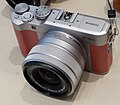
Fujifilm X-A3 review
Launch price 599 USD · 24.2 MP Bayer sensor · 1080p 60p video
Also written XA3 or X A3.

First X-A with a 24MP Bayer sensor and touchscreen; contrast-detect AF, no viewfinder.
Verdict
Fujifilm X-A3 is a discontinued entry-level mirrorless with a 24.2 MP Bayer sensor (unusual for Fuji), a flip-up selfie screen and 1080p/60 video. Contrast-detect AF, no viewfinder, no IBIS, 49 AF points. Launched at 599 USD.
Beginners who want a flip-screen X-A with touchscreen and 24 MP resolution.
In detail
Photographers tend to pick it up for a Bayer sensor (unusual for Fuji) and the price point it launched at. Released in 2016 at 599 USD, the body is no longer in production. It sits in the X-A line, which is Fuji's entry-level line aimed at first-time Fuji buyers.
Image quality out of the Bayer sensor is solid for the price, with the usual Fuji color science baked in. At 24.2 MP, native ISO is ISO 200 to 6400, modest by modern standards, the files give you enough room to crop without falling apart. Subject detection is the older contrast-based system, which still works for portraits and slow subjects but lags behind the current AI-driven Fuji bodies for action. Burst at 6 fps is conservative, and this is a camera aimed at slower, more deliberate work.
Video specs are more than capable for short-form and travel work. 1080p is the cap, so this is a stills-first body. You can grab clips, but do not expect it to replace a dedicated video camera.
In the hand it feels like a Fuji, with the usual tight dials and a deep enough grip. There is no in-body stabilization, so for low light or long lenses you will lean on stabilized XF glass. At 339g it is light enough to live in a small sling bag without becoming a chore.
Battery life is 410 shots per charge by CIPA, which translates to a full day of mixed shooting if you are not chimping the LCD constantly. There is a single card slot (SD UHS-I), which is fine for most people but worth knowing if you shoot events that demand redundancy. Bottom line: the used market is where this camera makes the most sense now that it is discontinued, and you can find them in good shape for a fraction of the launch price.
Pros and cons
What we like
- 24.2 MP Bayer sensor in 339g
- Touchscreen with flip-up selfie screen
- 1080p/60 video
- 410-shot CIPA battery life
The headline win is a 24 MP Bayer sensor in a 339g body, which is rare in the Fuji lineup and gives you more resolution than the older X-A models. Film simulation count is 5, which is the older but still solid lineup. The flip-up screen is a real win for vloggers and selfie shooters, and 410 shots per charge is honest battery life for the class.
Trade-offs
- Contrast-detect AF only
- No viewfinder, no IBIS, 1080p video
The honest trade-off is contrast-detect AF only, so action and moving kids will frustrate you. There is no in-body stabilisation and no stabilised prime to pair with it — the 50-140mm f/2.8 and the 18-55mm kit zoom have OIS, but neither is a natural fit on a body this size, so daylight is where this camera is happiest. Burst rate is conservative. There is no viewfinder at all, which is the single biggest thing separating it from an X-E2S, and the single card slot means backup discipline is on you.
Who is this for
Beginners who want a flip-screen X-A with touchscreen and 24 MP resolution. Light enough that it makes a great second body or a daily-carry option. It is a particularly strong pick on a budget, especially for first-time Fuji buyers.
Image quality
The X-A3 is one of the Fuji bodies that does not use X-Trans. It has a 24.2 MP Bayer sensor, and if you came here expecting the X-Trans look you should know that going in.
In practice the difference is smaller than the internet suggests. Fuji's color science and the film simulations run on the processor, not the sensor, so PROVIA and Classic Chrome out of an X-A3 still look like Fuji. What changes is the detail rendering. Bayer files have a slightly different texture, particularly in foliage, where X-Trans has its own character. Some people find the Bayer output cleaner. Some find it ordinary.
24.2 MP is more resolution than the 16 MP X-Trans II bodies of the same year, so you have real cropping room. Native ISO 200 to 6400, clean through 1600, usable at 3200. For an entry-level body released at 599 USD the files punch above the price, and that has always been the X-A line's argument.
Autofocus in practice
This is the X-A3's weak point and it is worth being blunt about. There is no phase detection. Autofocus is contrast detection across 49 points, and contrast detection works by hunting until the image is sharp.
For static subjects in decent light it is accurate, and accuracy is not the problem. Speed is. There is a visible pause while the lens racks to find focus, and in low light or low contrast that pause stretches. Continuous AF exists in the menu but tracking a moving subject is not something this body does in any reliable way.
There is no eye detection and no subject recognition. Face detection is present and works on faces that are facing you, which covers the selfie-and-portrait use case the flip screen was built for.
If your subjects sit still, this is manageable. If they are children, pets, or anything in motion, the X-A3 will frustrate you, and an X-T20 or X-T30 with phase detection is worth the extra money.
Video verdict
1080p at 60 fps, H.264, no log, no 4K. Standard for an entry-level 2016 body and not a reason to choose this camera.
The flip-up touchscreen makes the X-A3 more usable for talking to camera than most of its contemporaries, and 410 shots of battery life means it does not die halfway through. But contrast-detect autofocus during video means visible hunting whenever anything moves, which is exactly what you do not want in a piece to camera.
For occasional clips it is adequate. For anything you plan around, the flip screen is not enough to make up for the rest.
What makes this camera special
The flip-up touchscreen was the X-A3's reason for existing, and it landed at the moment the rest of the market decided front-facing screens mattered.
The screen rotates up through 180 degrees to sit above the body, so it faces forward with the camera held normally. Combined with a touchscreen you can tap to focus and fire, it makes one-handed self-portraits straightforward in a way that no amount of guessing at a fixed screen ever managed.
The second thing worth noting is the price of entry. At 599 USD the X-A3 was the cheapest route into the X mount, which means the cheapest route into Fuji's lens lineup. Buy the body, buy a 35mm f/2, and you are shooting the same glass as someone with an X-T5. On a budget that is a genuine argument, and it is still the argument for buying one used.
What X-A3 owners actually say
Two things dominate what owners say about the X-A3: the sensor is not X-Trans, and the camera is no longer cheap.
The sensor question is the one prospective buyers ask first, and the reviews answer it better than the forums do. DPReview's testing found the 24 MP Bayer sensor produces colour that is genuinely pleasing straight out of the camera — punchy, with strong blues and greens and good skin tones. Compared against the X-Trans bodies of the same era the gap shows up at high ISO, where an X-T20 holds noticeably less chroma noise in the shadows from 6400 upward, and the difference widens at 25600. In daylight, at sane ISOs, you are not giving up much, and Bayer files demosaic without the foliage artefacts X-Trans sometimes produces.
The pricing conversation is more pointed, and the X-A3 is the camera at the centre of it. The most-discussed thread on the subject was started by an owner who looked up their own purchase history: they bought an X-A3 new with a kit lens in 2018, and today the same body, without a lens, sells used for the same money. The replies are a catalogue of the same phenomenon across the old Fujifilm bodies — an X-E1 that went from £110 to over £300, an X-M1 bought at 75 dollars just before the market turned.
That reframes the buying case. The X-A3 was designed as the affordable, selfie-screen, social-shooting entry into X mount, and it was excellent at that job at its original price. As a used purchase competing against X-Trans bodies that have also appreciated, it only makes sense when the gap is real.
Owners who keep them tend to use them the way the camera was designed: daylight, a small prime, the flip screen, and JPEGs. The photographs people post from them hold up fine, which is the answer to whether the sensor matters.
Is the X-A3 still worth buying in 2026?
The X-A3 makes sense for exactly one reason: it is among the cheapest ways to get an X-mount body with a 24 MP sensor in your hands, and the lenses are what actually make Fuji worth using.
If you already own X-mount glass and want a light second body for daylight shooting, or if you are buying into the system and would rather spend the money on a lens than on the camera, this is a defensible choice. 339 grams, 410 shots per charge, 24 MP, and a flip screen for not much money.
Everything else argues against it. Contrast-detect autofocus is the real limitation and it affects every kind of shooting where the subject moves. There is no viewfinder, so bright-sun composition is awkward. No IBIS, no weather sealing, 1080p video.
The honest comparison is against a used X-T20 or X-T30. Both give you phase-detect autofocus, a viewfinder, and X-Trans, and both are worth stretching for if the budget reaches. Buy the X-A3 when it does not.
Rating breakdown
| Dimension | Score |
|---|---|
| Image quality | 5 / 10 |
| Autofocus | 2 / 10 |
| Video | 2 / 10 |
| Handling | 4 / 10 |
| Value | 5 / 10 |
Sub-ratings are the author’s assessment of each dimension against the current Fujifilm APS-C lineup.
X-A3 release date and lifecycle
The Fujifilm X-A3 was announced in August 2016. It was replaced by the X-A5.
Announcement month is from Fujifilm’s launch announcement; the on-sale month is not recorded for this body. Launch price is MSRP at release, not a used-market price.
Full specifications
| Release year | 2016 |
|---|---|
| Launch price | 599 USD |
| Status | Discontinued |
| Megapixels | 24.2 MP |
| Sensor generation | Bayer |
| Processor | EXR Processor II |
| ISO range | 200–6400 |
| AF points | 49 |
| Subject detection | none |
| Burst (fps) | 6 |
| Max video | 1080p 60p |
| Codec | H.264 |
| Log profile | No |
| Stabilization | None |
| Viewfinder | None |
| LCD | 3" flip touch |
| Weather sealed | No |
| Weight | 339g |
| Card slots | 1 |
| Card types | SD UHS-I |
| Battery | NP-W126S |
| Battery life (CIPA) | 410 shots |
| Film sims | 5 |
Highlighted rows are class-leading within the current Fujifilm APS-C lineup.
Film simulations (5)
- PROVIA
- Velvia
- ASTIA
- Classic Chrome
- Monochrome
Compared with


Fujifilm X-A3 vs siblings
How the X-A3 stacks up against the closest siblings in the current Fujifilm lineup.
Fujifilm X-A3 vs X70
The Fujifilm X-A3 and Fujifilm X70 are Fujifilm APS-C bodies from different lines — the X-A and the X70. Both launched in 2016. At launch the X-A3 was 599 USD and the X70 699 USD, making the X-A3 the more affordable of the two.
Where to buy
The link below runs an Amazon search for this camera rather than pointing at one listing, because stock and sellers move around. As an Amazon Associate we earn from qualifying purchases — at no extra cost to you.

See it in the wild
Owner impressions and real-world photos from the Fuji community.


Sources and further reading
Specs come from Fujifilm. Measured results, other reviewers’ verdicts, and owner reports are credited to the people who did the work:
- DPReview — Fujifilm X-A3 review (Bayer versus X-Trans, and the high-ISO gap)
- ePHOTOzine — Fujifilm X-A3 review, performance and noise against the X-T20
- Photography Blog — Fujifilm X-A3 review
- r/fujifilm — "Remember when Fujifilm was super affordable?", started over an X-A3 purchase history
- r/fujifilm — "Highland cows shot on X-A3"