X-E · 2013 · discontinued
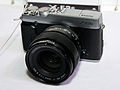
Fujifilm X-E2 review
Launch price 999 USD · 16.3 MP X-Trans II sensor · 1080p 60p video
Also written XE2 or X E2.

Added on-chip phase-detection AF, 7fps burst and built-in Wi-Fi.
Verdict
The Fujifilm X-E2 was the second-gen X-E mirrorless body that added on-chip phase-detect AF, 7 fps burst, and Wi-Fi, on the 16.3 MP X-Trans II sensor. Discontinued, 1080p/60, no IBIS.
This is for the used-market buyer who wants the first X-E body with phase-detect AF.
In detail
I have been meaning to dig into the older X-E bodies for a while. The Fujifilm X-E2 came out in 2013 at 999 USD, no longer in production. Sits in the X-E line, Fuji's compact rangefinder-style line. What it added over the X-E1 was on-chip phase-detection AF, a real tool for moving subjects.
At 16.3 MP on the X-Trans II sensor, native ISO 200 to 6400, modest by modern standards. Subject detection is the older contrast-based system. Burst at 7 fps is conservative.
1080p is the cap, so this is a stills-first body. You can grab clips, but do not expect it to replace a dedicated video camera.
In the hand it feels like a Fuji, with the usual tight dials. No in-body stabilization, so for low light you will lean on stabilized XF glass. At 350g it is light enough to live in a small sling bag. Bottom line: the used market is where this camera makes the most sense now that it is discontinued.
Pros and cons
What we like
- On-chip phase-detection AF
- 7 fps burst (up from 6 in X-E1)
- Built-in Wi-Fi, finally
- 16MP X-Trans II sensor
The headline win is on-chip phase-detection AF, which made a real difference for the X-E line in 2013. The X-Trans color science is hard to beat out of camera, and the JPEG recipes people have built up around Fuji are a real reason to choose it. 5 film simulations including Classic Chrome, all the classic Fuji look. At 350g it is the kind of body you can carry all day and forget about.
Trade-offs
- Discontinued, 1080p video only
- No IBIS, no touch LCD
The honest trade-off is that it is discontinued and tops out at 1080p video. No in-body stabilization means relying on stabilized lenses for low light. Burst rate is conservative, fine for portraits, street, and landscape but rules out serious sports work. The 2.36M-dot EVF is on the lower-resolution side. Single card slot is the kind of spec that does not matter until the day it does.
Who is this for
Used-market buyers who want the first X-E with phase-detect AF. Light enough that it makes a great second body or a daily-carry option. Slow, deliberate work suits it best, portraits, street, and travel are all in its wheelhouse.
Is the X-E2 still worth buying in 2026?
The X-E2 is the cheapest way into a Fujifilm body that focuses like a modern camera. It was the first X-E with phase-detect pixels on the sensor, and that one change is what separates it from the X-E1 in ordinary use. Pointing it at a person walking towards you stops being a gamble.
That is the argument for buying one. You get X-Trans II color, 7 fps, a 2.36 million dot viewfinder and Wi-Fi, on a body that has been out of production for over a decade and is priced accordingly. If your budget is small and you want to spend it on a lens instead, this is a sensible place to start.
The reasons against are all about the sensor's age. It is 16.3 MP, ISO stops at 6400, and video is 1080p. There is no touchscreen, so every focus point gets set with the pad and the joystick-less controls of 2013. None of that matters for daylight photography and all of it matters indoors at night.
The X-E3 is the honest alternative and it is worth stretching for. Same rangefinder shape, 24.3 MP, 4K video, a touchscreen and a focus joystick. Buy the X-E2 when the X-E3 is out of reach, not because you think you are getting the same camera for less.
X-E2 release date and lifecycle
The Fujifilm X-E2 was announced in October 2013. It was replaced by the X-E2S.
Announcement month is from Fujifilm’s launch announcement; the on-sale month is not recorded for this body. Launch price is MSRP at release, not a used-market price.
Full specifications
| Release year | 2013 |
|---|---|
| Launch price | 999 USD |
| Status | Discontinued |
| Megapixels | 16.3 MP |
| Sensor generation | X-Trans II |
| Processor | EXR Processor II |
| ISO range | 200–6400 |
| AF points | 49 |
| Subject detection | none |
| Burst (fps) | 7 |
| Max video | 1080p 60p |
| Codec | H.264 |
| Log profile | No |
| Stabilization | None |
| Viewfinder | EVF (2.36M dot) |
| LCD | 3" fixed |
| Weather sealed | No |
| Weight | 350g |
| Card slots | 1 |
| Card types | SD UHS-I |
| Battery | NP-W126 |
| Battery life (CIPA) | 350 shots |
| Film sims | 5 |
Highlighted rows are class-leading within the current Fujifilm APS-C lineup.
Film simulations (5)
- PROVIA
- Velvia
- ASTIA
- Classic Chrome
- Monochrome
Compared with



Fujifilm X-E2 vs siblings
How the X-E2 stacks up against the closest siblings in the current Fujifilm lineup.
Fujifilm X-E2 vs X-E5
The Fujifilm X-E2 and Fujifilm X-E5 are both Fujifilm X-E bodies. The X-E5 is the newer of the two, arriving in 2025. At launch the X-E2 was 999 USD and the X-E5 1,699 USD, making the X-E2 the more affordable of the two.
Fujifilm X-E2 vs X-E4
The Fujifilm X-E2 and Fujifilm X-E4 are both Fujifilm X-E bodies. The X-E4 is the newer of the two, arriving in 2021. At launch the X-E2 was 999 USD and the X-E4 849 USD, making the X-E4 the more affordable of the two.
Where to buy
The link below runs an Amazon search for this camera rather than pointing at one listing, because stock and sellers move around. As an Amazon Associate we earn from qualifying purchases — at no extra cost to you.

See it in the wild
Owner impressions and real-world photos from the Fuji community.

