X100 · 2024 · In production
Fujifilm X100VI review
Launch price 1,599 USD · 40.2 MP X-Trans V sensor · 6K 30p video

Fixed 23mm f/2 lens, hybrid OVF/EVF. First X100 with IBIS and the 40MP sensor.
Verdict
The Fujifilm X100VI is a sixth-gen fixed 23mm f/2 mirrorless compact with a 40.2 MP X-Trans V sensor, 6-stop IBIS, and 6K/30p. Hybrid OVF/EVF at 1599 USD, the first X100 with IBIS and 40MP.
This is for the street and travel photographer who wants a fixed 23mm compact with IBIS.
In detail
I have been a fan of the X100 line for years, and the Fujifilm X100VI is finally the one I would actually buy. Released in 2024 at 1,599 USD, still in production. Sixth generation of Fuji's fixed-lens compact, the first with IBIS and the 40MP X-Trans V sensor.
At 40.2 MP on the X-Trans V sensor, native ISO 125 to 12800, AI subject detection covering people, animals, cars, planes. It just works. Burst at 11 fps is plenty for travel, family, and most outdoor work.
6K 30p with F-Log2 is on the menu, useful for cropping or downsampling to 4K. IBIS is rated at 6 stops by CIPA. At 521g it is fine for a full day of walking around.
Battery life is 450 shots CIPA, a full day of mixed shooting. Single card slot. Bottom line: this is the X100 body to look at if you want the fixed-lens compact experience with a hybrid viewfinder without jumping to a flagship.
Pros and cons
What we like
- 40MP X-Trans V with 6-stop IBIS
- AI subject detection via X-Processor 5
- Hybrid OVF/EVF in a fixed-lens body
- 6K/30p with F-Log2
The headline win is 40MP X-Trans V with 6-stop IBIS, finally in a body that fits in a coat pocket. The X-Trans color science is hard to beat out of camera, and the JPEG recipes built up around the system are a real reason to choose Fuji. The hybrid OVF/EVF is the kind of feature you do not appreciate until you try a body without it. 8 film simulations on tap, all the classics.
Trade-offs
- Single SD UHS-I slot, no weather sealing
- Fixed 23mm f/2 lens, no zoom
The honest trade-off is the single SD UHS-I slot and no weather sealing. Single card slot is the kind of spec that does not matter until the day it does, backup discipline is on you. The fixed lens is the whole point, but it also means you cannot swap focal lengths, travel and everyday carry shooters tend to love it, event and wildlife shooters usually do not.
Who is this for
Street and travel photographers who want a fixed 23mm compact with the latest Fuji sensor and IBIS. Landscape and studio shooters who crop a lot will appreciate the resolution headroom. Travel videographers and YouTubers running a one-person crew can get by. Street, travel, and everyday-carry photographers tend to fall in love with this format.
Image quality
40.2 MP X-Trans V behind the 23mm f/2 the X100V introduced, and that pairing is the whole conversation about this camera. The sensor resolves more than the lens comfortably delivers wide open at close range — the soft-at-f/2-up-close character the X100 line has always had is still in there, and 40 MP is better at showing it to you than 26 MP was.
Stop down a little, or shoot at any normal working distance, and the files are the best any X100 has produced. Reviewers testing it consistently land on the same observation: enough detail to crop hard, and raw files that hold together when you enlarge them. On a fixed-lens camera the crop is the zoom, so the resolution buys you framing you would otherwise have to walk to.
Base ISO 125, top native 12800, and the dynamic range of the current X-Trans V generation. Eight film simulations including NOSTALGIC Neg., Classic Neg. and ACROS, and this is a camera people buy specifically to shoot JPEG — the SOOC files are the product, not a preview of the raw.
The 4-stop built-in ND filter deserves a line of its own. Shooting at f/2 in daylight, or dragging the shutter for motion in the middle of the afternoon, works without carrying anything, and the leaf shutter syncs flash at speeds no focal-plane shutter will.
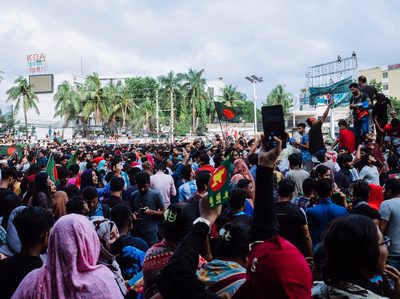
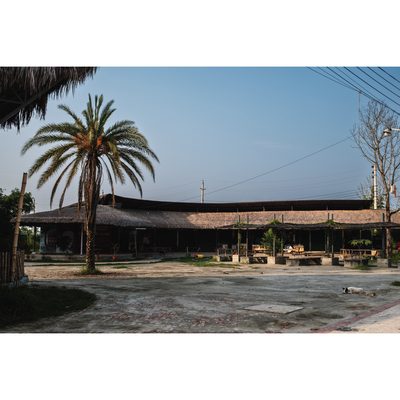
Photos shot on the X100VI
We shot and published 31 frames on the X100VI, March 2024 to September 2025. The 24 below are spread evenly across that period. Click any thumbnail for the full-size file and its settings on masnun.photos. These are edited photographs, not resolution tests — read them as a record of what the camera actually gets used for.






















Autofocus in practice
X-Processor 5 with the full AI subject-detection set — people, animals, birds, cars, motorcycles, bikes, aircraft, trains — plus face and eye detection, and 11 fps mechanical. Against the X100V this is a clear step: Kevin Mullins, who has owned every X100 since 2011 and shoots weddings with them, describes the AF as substantially faster and more sure-footed than the previous body.
It is still a fixed-lens compact, and that sets the ceiling. The lens is the same one the X100V used, driven the same way, so autofocus speed is bounded by the glass rather than the processor. Against an interchangeable-lens X-T5 with a linear-motor prime on it, this focuses more slowly, and everybody who owns both notices.
For what people actually do with an X100 — street, travel, family, documentary work at a fixed 35mm-equivalent — it is comfortably enough. Face detection is reliable, subject detection works, and single-point AF-S at conversational distance is quick.
The hybrid finder changes how you use AF more than the AF specs do. In optical mode you are looking at the world with a frame line over it and a small EVF panel in the corner, which means you can watch a subject enter the frame before it exists in the picture. It is the reason the camera exists, and it takes a few weeks to stop fighting it.
Video verdict
6.2K at 30p with F-Log2, 10-bit internal, and 6 stops of IBIS — a video spec sheet that would have been a flagship two generations ago, in a camera almost nobody buys for video.
The parts that matter in practice are the stabilisation and the ND. IBIS makes handheld walking footage usable, and the built-in 4-stop ND gets you to a 1/48 shutter at f/2 in daylight without screwing anything onto the front. For travel clips cut between stills, that combination is genuinely convenient.
The limits are structural. One SD slot and it is UHS-I, which is the slowest card interface in the current lineup and the reason recording is not unlimited. The screen tilts rather than flips, so filming yourself means shooting blind. And the lens is 23mm f/2 forever, so every shot is the same focal length.
Treat video here as a capable bonus on a stills camera. If video is the job, an X-S20 costs less and was designed for it.
What makes this camera special
The hybrid viewfinder and the fixed lens, and it is worth being blunt about this: those two things are the entire reason to buy an X100VI rather than a cheaper camera with the same sensor in it.
The best summary of this came from r/fujifilm, in a thread started by an owner who had bought at launch and found himself lukewarm. The top reply: there are two reasons to get an X100, the optical finder and the fixed 23mm, and if neither speaks to you there are better options — with the leaf shutter as a third. That is exactly right, and it is the most useful buying advice on this camera anywhere.
The finder flips between a real optical view with projected frame lines and a full electronic one, with an electronic rangefinder patch available in the corner. Nothing else in the current market does it. The leaf shutter is nearly silent and syncs flash at 1/2000s. The lens does not come off, which people describe as a limitation for about a month and then as the point.
Add the 4-stop ND, 6 stops of IBIS and a 521g body and you have the camera that gets carried. Kevin Mullins has shot weddings on one. It also gets used on holidays by people who own nothing else.
What X100VI owners actually say
No camera in the X series has had a stranger relationship with its own audience.
Start with demand. Fujifilm announced the X100VI in February 2024 and r/fujifilm ended up running consolidated order-and-delay sticky threads, one of which passed ten thousand comments. A separate post asking people to limit X100VI content to photos taken by the camera rather than photos of the camera cleared a thousand upvotes. Two years after launch Kevin Mullins was still describing UK supply as short, with used examples occasionally going for more than the retail price. If you want one, availability is a real part of the buying decision, not a footnote.
The pushback came from inside the community and it was thoughtful. One of the best-received threads of the launch week was a long argument by an owner that most people did not need the upgrade — that whether 40 MP helps depends on your focal length habits, and that the camera you already own is likely better than the reason you have invented for replacing it. Another owner cancelled a pre-order and posted about enjoying his X100F instead.
The most instructive owner report came a few months in, from someone who bought at launch off an X-T2. Everything he loved turned out to be generic new-camera improvement — IBIS, 40 MP, low light, new film simulations, better tracking — while the things that make an X100 an X100 were the parts he was not using or was annoyed by, the optical finder in particular. The community's answer, upvoted well above the post, was the two-reasons rule: buy it for the OVF and the fixed 23mm, or buy something else.
Owners who do want those things are close to evangelical, and they tend to have owned several. The pattern across the long-term reviews is the same — the fixed focal length is described as the feature, not the compromise, because it forces you to move.
One practical warning that comes up repeatedly: this camera is a theft magnet in tourist cities, and r/fujifilm has the recovery threads to prove it.
Rating breakdown
| Dimension | Score |
|---|---|
| Image quality | 9 / 10 |
| Autofocus | 8 / 10 |
| Video | 7 / 10 |
| Handling | 8 / 10 |
| Value | 6 / 10 |
Sub-ratings are the author’s assessment of each dimension against the current Fujifilm APS-C lineup.
X100VI release date and lifecycle
The Fujifilm X100VI was announced in February 2024.
| Announced | |
|---|---|
| Launch price | 1,599 USD |
| Status | Still in production |
| Replaced | X100V |
Announcement month is from Fujifilm’s launch announcement; the on-sale month is not recorded for this body. Launch price is MSRP at release, not a used-market price.
Full specifications
| Release year | 2024 |
|---|---|
| Launch price | 1,599 USD |
| Status | Current |
| Megapixels | 40.2 MP |
| Sensor generation | X-Trans V |
| Processor | X-Processor 5 |
| ISO range | 125–12800 |
| AF points | 425 |
| Subject detection | ai |
| Burst (fps) | 11 |
| Max video | 6K 30p |
| Codec | H.265, H.264 |
| Log profile | F-Log2 |
| Stabilization | 6 stops |
| Viewfinder | Hybrid OVF/EVF (3.69M dot) |
| LCD | 3" tilt touch |
| Weather sealed | No |
| Weight | 521g |
| Card slots | 1 |
| Card types | SD UHS-I |
| Battery | NP-W126S |
| Battery life (CIPA) | 450 shots |
| Film sims | 8 |
Highlighted rows are class-leading within the current Fujifilm APS-C lineup.
Film simulations (8)
- PROVIA
- Velvia
- ASTIA
- Classic Chrome
- Classic Neg.
- NOSTALGIC Neg.
- ACROS
- ETERNA
Compared with


Fujifilm X100VI vs siblings
How the X100VI stacks up against the closest siblings in the current Fujifilm lineup.
Fujifilm X100VI vs X100F
The Fujifilm X100VI and Fujifilm X100F are both Fujifilm X100 bodies. The X100VI is the newer of the two, arriving in 2024. At launch the X100VI was 1,599 USD and the X100F 1,299 USD, making the X100F the more affordable of the two.
Fujifilm X100VI vs X100T
The Fujifilm X100VI and Fujifilm X100T are both Fujifilm X100 bodies. The X100VI is the newer of the two, arriving in 2024. At launch the X100VI was 1,599 USD and the X100T 1,299 USD, making the X100T the more affordable of the two.
Fujifilm X100VI vs X100S
The Fujifilm X100VI and Fujifilm X100S are both Fujifilm X100 bodies. The X100VI is the newer of the two, arriving in 2024. At launch the X100VI was 1,599 USD and the X100S 1,299 USD, making the X100S the more affordable of the two.
Further reading
Article
The Fujifilm X-E5 as an X100VI alternative: which 23mm lens?
I owned both and kept the X-E5, for the interchangeable lenses, the film simulation dial, and the look. Two small 23mm lenses cover daylight and low light.
Article
Why I prefer Fujifilm APS-C over GFX medium format
GFX wins on resolution and dynamic range. APS-C wins on depth of field, fast glass, reach, weight, and price. Here is the full trade-off, with the numbers.
Article
X100VI vs GFX100RF: why I would take the APS-C one
The RF's 35mm f/4 works out to an equivalent f/3.2. The X100VI's 23mm f/2 works out to f/3.0. Same look, $3,300 apart.
Article
How to get phone-like HDR photos from a Fujifilm camera
Your phone takes eight dark photos and averages them. Here are five ways to get the same result on a Fuji, explained from scratch with no jargon.
Article
A love letter to the Fujifilm X100 series
Bought the X100V before the hype, upgraded to the X100VI, sold it over a synthetic shutter click, and came back to a black one. Four years of my own photos.
Article
Quick Switching between Color and B&W profiles on Fuji bodies
The Nikon Zf has a B&W switch. You can build the same thing on a Fuji: FS slots on the film simulation dial, or a Recall C1 button on everything else.
Article
Fujifilm X100VI accessories: what to buy, and what to skip
SD cards, the filter that finishes the weather sealing, grips, straps, black mist, and the one accessory that keeps breaking shutter buttons.
Article
Fujifilm X-M5 as Ricoh GR alternative
The GR does one thing nothing else does, and it is not what you think. Where the X-M5 plus a pancake matches it, where it does not, and which of the four small lenses to buy.
Article
X100VI vs Leica Q3 and Q3 43: what the money buys
The Q3 43's 43mm f/2 is the Leica closest to the X100VI's 35mm view, and at matched framing the maths says almost two stops. Here is what the other 6,351 USD buys.
Where to buy
The link below runs an Amazon search for this camera rather than pointing at one listing, because stock and sellers move around. As an Amazon Associate we earn from qualifying purchases — at no extra cost to you.

See it in the wild
Owner impressions and real-world photos from the Fuji community.


Sources and further reading
Specs come from Fujifilm. Measured results, other reviewers’ verdicts, and owner reports are credited to the people who did the work:
- Fujifilm — X100VI product page and specifications
- DPReview — Fujifilm X100VI review
- Kevin Mullins — X100VI review two years on (every X100 since 2011, weddings and street)
- r/fujifilm — "Fuji X100VI and why, maybe, you don't NEED one"
- r/fujifilm — "Anyone else just so-so on the X100VI?" and the two-reasons rule in the replies
- r/fujifilm — the X100VI ordering, shipment and delay sticky thread
- r/fujifilm — "Petition to limit X100VI posts to photos taken BY the camera"