Fujifilm XF lens · announced January 27, 2021
Fujifilm XF 27mm F2.8 R WR review
27 mm · f/2.8 · 84 g · 7 elements in 5 groups
Verdict
The original X-mount pancake, refreshed in 2021 with weather sealing and a refreshed optical formula. 41 mm-equivalent field of view, f/2.8, 84g. The lens to compare the XF 23mm F2.8 R WR against.
Photographers for whom size is the deciding feature — the lightest Fuji kit, a jacket-pocket travel setup, or a discreet street camera that behaves like an X100.
In detail
The XF 27mm F2.8 R WR exists for one reason: to make a Fujifilm body disappear. At 84g and 23 mm long it is the smallest autofocus lens Fujifilm makes, and on a compact body like the X-E4 or X-T30 the whole rig ends up roughly the size of an X100 — pocketable in a jacket, unnoticed on a strap. That is the entire pitch, and for a lot of owners it is enough.
This is the 2021 refresh of Fujifilm's original 2013 pancake. The R WR version adds weather resistance and a proper aperture ring around a seven-element, five-group formula with one aspherical element, a seven-blade diaphragm, and a 0.34 m minimum focus. The 41 mm-equivalent field of view sits between the classic 35 and 50 full-frame framings — a slightly-longer-than-normal view that suits everyday documentation.
Image quality is not the compromise you might expect from a lens this thin. Owners describe it as very sharp with rich colour rendering and strong micro-contrast, and straight-out-of-camera JPEGs are a common reason people keep it on the body. Against the cheaper TTArtisan 27mm, the consensus is that the Fuji resolves a little better, controls vignetting far better, and adds the aperture ring and sealing — though whether that justifies roughly 2.5× the price is an argument that never fully settles.
The catch is autofocus and focal length. The AF is adequate rather than quick, and it is audible — owners report the focus sound getting picked up by the in-camera mic, which makes the lens a poor match for video with the built-in audio. And the 41 mm-equivalent view is divisive: several long-time shooters call it a "no man's land" that is neither wide enough to take in a scene nor tight enough for a close portrait, a focal length that rewards moving your feet and punishes lazy composition.
Pros and cons
What we like
- Smallest autofocus lens Fujifilm makes — 84g, turns a small body into an X100-sized rig.
- Very sharp with rich colour and strong micro-contrast; excellent SOOC JPEGs.
- R WR update adds weather sealing and an aperture ring over the 2013 original.
- Beats the cheaper TTArtisan 27mm on corners, vignetting, and build.
Size is the whole point, and the lens delivers on it completely. Nothing else in the Fuji autofocus lineup turns an interchangeable-lens body into something this close to a fixed-lens compact. For travel, street, and everyday carry — the situations where the best camera is the one you actually brought — the 27mm's form factor is hard to argue with.
The optics punch above the size. Stopped down it is crisp across the frame, the colour and micro-contrast are genuinely good, and it holds up on the 40 MP sensor. The R WR update matters here: the aperture ring restores the tactile Fuji handling the original pancake lacked, and the weather sealing makes it a viable everyday lens in conditions that would keep the TTArtisan alternative in the bag.
As a second lens it is close to free to carry. Owners routinely describe dropping it in a pocket as a "body cap" lens to bring alongside a larger portrait or telephoto zoom, precisely because it adds almost no weight or bulk. On a small body it is discreet enough that people stop noticing the camera, which is worth real money for candid work.
Trade-offs
- Autofocus is slow-ish and audible — the focus noise carries into in-camera video audio.
- f/2.8 is a stop slower than the Fujicron primes; 0.34 m minimum focus is the longest of them.
- 41 mm-equivalent is a divisive "no man's land" — optically fine, stylistically flat for some.
- Roughly 2.5× the price of the TTArtisan 27mm for a modest optical edge.
Autofocus is the weakest part. It is not broken — for stills in decent light it locks fine — but it is slower and noticeably louder than the f/2 primes, and the focus noise carrying into in-camera video audio is a documented, repeated complaint. Video shooters relying on the built-in mic should treat this as a real limitation, not a quibble.
f/2.8 is a stop slower than the Fujicron primes, which costs you both low-light headroom and subject separation. The 0.34 m minimum focus is the longest of the small primes, so close detail work is out. And a few owners simply find it soft or characterless next to the 23mm F2, and move on.
The 41 mm-equivalent focal length is the quiet dealbreaker for some. It does nothing badly and nothing exceptionally, and shooters who want a lens with a clear point of view often find it forgettable — the reason it gets described as optically fine but stylistically flat. If you already own a 23 or a 35, the 27 can feel redundant rather than complementary.
Who is this for
The XF 27mm F2.8 R WR is the lens to buy when smallness is the feature you want above all others. If your goal is the lightest possible Fuji kit, a jacket-pocket travel setup, or a discreet street camera that behaves like an X100 with a swappable mount, nothing else in the range fits the brief as neatly.
It is the wrong lens for low light, video with the built-in mic, or anyone who wants shallow depth of field and fast, silent autofocus. The XF 23mm F2 R WR or XF 35mm F2 R WR give you a faster aperture and better AF for a modest size penalty, and are the better single-prime choice if pocketability is not your top priority.
Against the TTArtisan 27mm, the Fuji earns its premium only if you value the aperture ring, weather sealing, and cleaner corners; if you do not, the cheaper lens gets you most of the way for far less. And if the 41 mm-equivalent view leaves you cold, that is a sign to spend the money on a 23 or 35 instead.
Photos shot on the XF 27mm F2.8 R WR
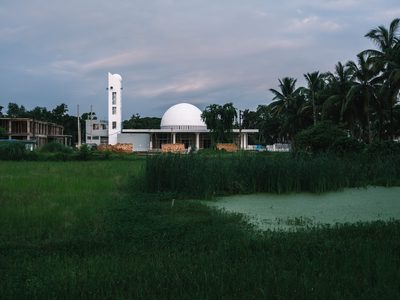
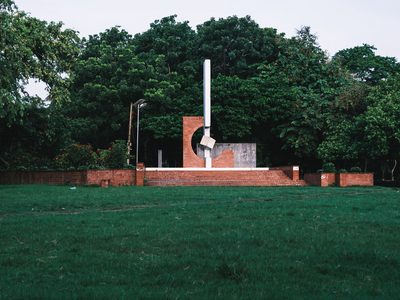
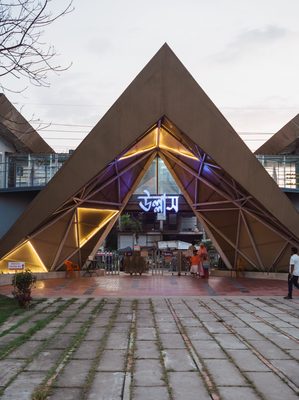
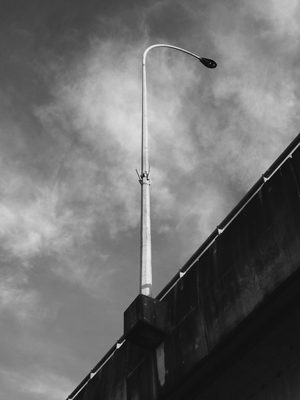
We shot and published 17 frames on the XF 27mm F2.8 R WR, June 2022 to November 2025. Click any thumbnail for the full-size file and its settings on masnun.photos. Every frame is edited, so read them as a record of how the lens renders in use rather than as a resolution test.













Full specifications
| Focal length | 27 mm |
|---|---|
| 35mm equivalent | 41 mm |
| Maximum aperture | f/2.8 |
| Minimum aperture | f/16 |
| Optical construction | 7 elements in 5 groups |
| Special elements | 1 aspherical element |
| Min. focus distance | 0.34 m |
| Max. magnification | 0.1× |
| Aperture blades | 7 |
| Filter thread | 39 mm |
| Diameter × length | 61.2 × 23 mm |
| Weight | 84g |
| Weather sealing | Yes |
| Min. operating temp | -10 °C |
| Focus drive | DC coreless motor |
| Optical stabilization | No |
| Announced | January 27, 2021 |
Rating breakdown
| Dimension | Score |
|---|---|
| Image quality | 8 / 10 |
| Autofocus | 6 / 10 |
| Handling | 9 / 10 |
| Value | 7 / 10 |
Where to buy
The link below runs an Amazon search for this lens rather than pointing at one listing, because stock and sellers move around. As an Amazon Associate we earn from qualifying purchases — at no extra cost to you.
XF 27mm F2.8 R WRAmazon · search resultsCompare head-to-head
Still choosing?
If you are weighing this against the other small primes, the lens picker ranks them against how you actually shoot. If the body is still open too, start with the camera quiz.