XF10 · 2018 · discontinued
Fujifilm XF10 review
Launch price 499 USD · 24.2 MP Bayer sensor · 4K 15p video

Budget 24MP Bayer compact with a 28mm-equiv f/2.8 lens; 4K capped at 15fps, no viewfinder.
Verdict
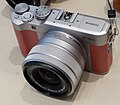
Budget 24.2 MP Bayer fixed-lens mirrorless compact with a 28mm-equivalent f/2.8 lens, 4K video (capped at 15 fps), phase-detect AF and face/eye detection. No viewfinder, no IBIS, fixed LCD. At 279g the lightest fixed-lens Fuji ever made. Discontinued entry-level compact.
Budget buyers who want a pocketable fixed-lens Fuji compact under 300g.
In detail
I have been meaning to talk about the XF10 for a while, since it is one of those cameras people forget Fuji ever made. Photographers tend to pick it up for a Bayer sensor (unusual for Fuji) and the price point it launched at. Released in 2018 at 499 USD, the body is no longer in production. It sits in the XF10 line, Fuji's fixed-lens compact with a 28mm-equivalent pancake lens. Sounds good? It is the lightest fixed-lens Fuji you can buy.
Out-of-camera JPEGs are a real reason to pick this over the competition. At 24.2 MP, native ISO runs ISO 200 to 12800, plenty for low light with the faster XF primes, the files give you enough room to crop without falling apart. Face and eye detection is on board and works well for portraits and street. Burst at 6 fps is conservative, this is a camera aimed at slower, more deliberate work.
Video specs are more than capable for short-form and travel work. 4K tops out at 15p, which is essentially a 4K stills grab. For real video work you will want 1080p, which is solid.
Build is the entry-level Fuji recipe, lighter and more plasticky than the flagship bodies, and without weather sealing. There is no in-body stabilization, so for low light you will lean on the bright f/2.8 lens and a steady hand. At 279g it is light enough to live in a jacket pocket without becoming a chore.
Battery life is 330 shots CIPA, so carrying a spare NP-95 is not optional. There is a single SD UHS-I card slot, which is fine for most people but worth knowing if you shoot events that demand redundancy. Bottom line: the used market is where this camera makes the most sense now that it is discontinued, and you can find them in good shape for a fraction of the launch price.
Pros and cons
What we like
- Lightest Fuji ever at 279g
- Cheapest fixed-lens Fuji at 499 USD
- Phase-detect AF with face/eye detection
- Fixed 28mm-equiv f/2.8 lens
The headline win is being the lightest Fuji ever at 279g, the kind of camera you forget is in your pocket. Film simulation count is 5, the older but still solid lineup. Phase-detect AF with face/eye detection is a real treat at this price. On the video side, 4K 15p is more than enough for most hybrid shooters, and the Fuji film simulations translate to video just as well.
Trade-offs
- 4K capped at 15 fps, no log
- No viewfinder, no IBIS, fixed LCD
The honest trade-off is 4K capped at 15 fps with no log, which makes the 4K mode close to unusable for real footage. There is no stabilisation and no way to add any, because the lens does not come off — the f/2.8 aperture carries more of the low-light load here than it would on a slower compact. Burst rate is conservative, fine for portraits, street and landscape but no use for sports. And the camera is slow to operate: menu navigation and card writing get in each other's way, which is the complaint every owner eventually makes.
Who is this for
Budget buyers who want a pocketable fixed-lens Fuji compact under 300g. Travel videographers and YouTubers running a one-person crew can absolutely get by with this body. Street, travel, and everyday-carry photographers tend to fall in love with this format, and it is a particularly strong pick on a budget for first-time Fuji buyers.
Image quality
24.2 MP from a Bayer sensor behind a fixed 28mm-equivalent f/2.8 lens. On resolution alone the XF10 beats the X70 it followed, and for a camera that launched at 499 USD the files are better than the price implies.
Fuji's color and the film simulations are all here, so JPEGs look like Fuji JPEGs. The five simulations on board include PRO Neg. Std, which is a genuinely useful skin-tone option and not something you always find on an entry-level body. Native ISO stretches to 12800, higher than the X-Trans II compacts, though the top of that range is a marketing number more than a working one. Through ISO 3200 the files are fine.
The lens is the same 28mm-equivalent f/2.8 brief as the X70, and it is sharp in the middle from wide open. What you do not get is subject separation. 28mm at f/2.8 on APS-C keeps nearly everything in focus, which suits street and travel and works against you for portraits.
Autofocus in practice
The XF10 gets phase detection across 91 points plus face and eye detection, which puts it ahead of the X-A3 and ahead of the X-Trans II compacts on paper.
In use it is a mixed result. Single-shot AF in good light is quick and the eye detection does what it says on cooperative subjects, which is more than the X70 offers. Low light is where it slows down noticeably, and the camera's general responsiveness does not help. This is a budget body and the buffer, the write speed, and the wake-from-sleep time all remind you of that.
Continuous AF and tracking are not the reason to buy this camera. As with the X70, the sensible way to shoot a fixed 28mm f/2.8 lens is to set focus for the zone you are working in and let depth of field do the rest.
Video verdict
The XF10 records 4K, and the 4K is capped at 15 frames per second. That is not a typo and it is not usable for normal video. 15 fps looks like a slideshow on anything with motion in it.
What you actually have is a 1080p camera with a 4K checkbox on the box. The 1080p is fine for clips. There is no log profile, no microphone input worth planning around, and a fixed screen that does not tilt or face forward, so even talking to camera is awkward.
Buy this camera for stills. The video specification is the clearest sign of where Fuji made the cuts to hit 499 USD.
What makes this camera special
At 279 grams the XF10 is the lightest fixed-lens camera Fuji has made, and that number is doing more work than any feature on the spec sheet.
A camera that weighs less than a can of drink and has a real APS-C sensor in it gets carried on days when a bigger camera stays home. That is the entire argument for a pocket compact, and the XF10 makes it more convincingly than anything else in the lineup on price. It launched at 499 USD, which made it the cheapest fixed-lens Fuji ever, and the cheapest way to get APS-C Fuji color in a jacket pocket.
The cuts that got it there are real and you will meet all of them. Fixed screen, no viewfinder, no IBIS, unusable 4K, and a body that feels its price in the hand. But nothing else in the X range combines this sensor size, this weight, and this price, and for a second camera that lives in a bag permanently, that combination is the whole point.
What XF10 owners actually say
The XF10 has a small, quietly loyal ownership and one universally acknowledged flaw.
Start with the flaw, because it is the thing to know before buying. The camera is slow. Ritchie Roesch, comparing it against the X70 and the Ricoh GR line, describes sluggish performance and a camera that struggled to do two things at once — navigate a menu while writing to the card and you wait. Owners describe the same thing in their own words. It is not that any single operation is unbearable; it is that a compact you carry for spontaneous frames should not make you wait, and this one does.
What owners defend is the output. One who bought an XF10 as an everyday carry posted a set a few months in and, asked how it compared, said the sensor is good, the lens is good enough, and the results struck them as better than what the Ricoh GR III — the consensus best of the genre — was giving them. Another sold theirs and posted about wanting it back within months. A frame shot on an XF10 was picked for a Fujifilm recognition exhibition, which is a fair answer to anyone who dismisses the 24 MP Bayer sensor for not being X-Trans.
The second recurring theme is the same one the X70 generates: people asking whether Fujifilm will ever make another one. Between the two of them these threads are a standing feature of r/fujifilm, and the two cameras get named together as the most underestimated bodies Fujifilm has made.
Used pricing sits low enough that the calculation is easy. Owners have posted local finds around 450 USD and asked whether it is worth it; the answers are consistently yes, with the operating speed named as the thing you are accepting in exchange.
Is the XF10 still worth buying in 2026?
The XF10 is the budget answer to a question the X70 asks more expensively: what is the cheapest way to carry APS-C Fuji color in a pocket.
It wins on paper against the X70 in three places. More resolution at 24 MP against 16, phase-detect autofocus with eye detection, and a lighter body at 279 grams against 340. It loses on sensor character if you specifically want X-Trans, on the tilting touchscreen, and on the general feel of the thing.
Against a Ricoh GR, the XF10 is usually the cheaper option and the Ricoh is usually the better camera, particularly on responsiveness and pocketability. Against a used X100 series body, the XF10 is much cheaper and much less camera. There is no viewfinder here and no leaf shutter.
Buy it if the budget is the binding constraint and you want Fuji JPEGs in something you will actually carry. Skip it if you shoot video, if you need a viewfinder, or if stretching to a used X100F is realistic. Do not buy it for the 4K.
Rating breakdown
| Dimension | Score |
|---|---|
| Image quality | 5 / 10 |
| Autofocus | 4 / 10 |
| Video | 1 / 10 |
| Handling | 4 / 10 |
| Value | 6 / 10 |
Sub-ratings are the author’s assessment of each dimension against the current Fujifilm APS-C lineup.
XF10 release date and lifecycle
The Fujifilm XF10 was announced in July 2018.
| Announced | |
|---|---|
| Launch price | 499 USD |
| Status | Discontinued |
| Replaced | X70 |
Announcement month is from Fujifilm’s launch announcement; the on-sale month is not recorded for this body. Launch price is MSRP at release, not a used-market price.
Full specifications
| Release year | 2018 |
|---|---|
| Launch price | 499 USD |
| Status | Discontinued |
| Megapixels | 24.2 MP |
| Sensor generation | Bayer |
| Processor | Unnamed Bayer engine |
| ISO range | 200–12800 |
| AF points | 91 |
| Subject detection | face-eye |
| Burst (fps) | 6 |
| Max video | 4K 15p |
| Codec | H.264 |
| Log profile | No |
| Stabilization | None |
| Viewfinder | None |
| LCD | 3" fixed touch |
| Weather sealed | No |
| Weight | 279g |
| Card slots | 1 |
| Card types | SD UHS-I |
| Battery | NP-95 |
| Battery life (CIPA) | 330 shots |
| Film sims | 5 |
Highlighted rows are class-leading within the current Fujifilm APS-C lineup.
Film simulations (5)
- PROVIA
- Velvia
- ASTIA
- Classic Chrome
- PRO Neg. Std
Compared with



Further reading
Where to buy
The link below runs an Amazon search for this camera rather than pointing at one listing, because stock and sellers move around. As an Amazon Associate we earn from qualifying purchases — at no extra cost to you.

See it in the wild
Owner impressions and real-world photos from the Fuji community.


Sources and further reading
Specs come from Fujifilm. Measured results, other reviewers’ verdicts, and owner reports are credited to the people who did the work:
- DPReview — Fujifilm XF10 review
- Ritchie Roesch (Fuji X Weekly) — X70 vs XF10 vs Ricoh GR (where the sluggishness gets documented)
- r/fujifilm — "Bought a Fujifilm XF10 a few months back for an everyday carry camera"
- r/fujifilm — "Worth getting used XF10?"
- r/fujifilm — "A photo I shot got selected for a Fujifilm recognition exhibition — XF10"
- r/fujifilm — "Will they ever make something like the XF10 again?"