Fujifilm XF lens · announced January 9, 2012
Fujifilm XF 35mm F1.4 R review
35 mm · f/1.4 · 187 g · 8 elements in 6 groups
Verdict
One of the three primes that launched the X mount in January 2012, and still the lens Fujifilm owners cite when they talk about rendering. 187g, f/1.4, 0.28 m close focus, and autofocus that has aged badly.
Photographers who want character over measurements at a 53 mm-equivalent view, and who shoot subjects that hold still long enough for 2012 autofocus.
In detail
The XF 35mm F1.4 R is the lens people mean when they say a Fujifilm lens has character. It launched with the X-Pro1 on January 9, 2012, as one of the three primes that opened the X mount, and more than a decade later it is still the lens that owners of newer, better-behaved glass keep coming back to.
Optically it is eight elements in six groups with one aspherical element, a seven-blade rounded diaphragm, and an f/1.4 maximum aperture. The barrel is 50.4 mm long, 187g, and takes 52 mm filters. Minimum focus is 0.8 m in the normal range and 0.28 m in macro mode, for a 0.17x reproduction ratio — the XF 23mm F1.4 R gets equally close but only reaches 0.1x, so this is the one that actually fills a frame with a small subject.
What the numbers do not tell you is how it draws. Wide open the lens is sharp where you focused and falls away quickly and smoothly everywhere else, with warm colour and a gentle roll into highlights rather than a clinical edge. On a 26 MP body it looks like a lens designed by people who cared what an image felt like; on the 40 MP X-T5 it holds up better than a 2012 design has any right to. Our own frames span the X-E4, X-T3, X-Pro3 and X-T5, and the rendering is consistent across all of them.
The 53 mm-equivalent field of view is the other half of the appeal. It sits between the documentary 35 mm view and a short portrait length, which makes it awkward for nothing and ideal for a lot: food, people at conversational distance, detail in a street, a plate on a table. If you own one Fuji prime and shoot without a plan, this is a strong candidate for which one it should be.
Pros and cons
What we like
- Rendering the later f/2 primes do not match — warm, soft-edged, short falloff.
- 187g and 50.4 mm; small enough to live on an X-E body permanently.
- 0.28 m macro mode at 0.17× covers food and detail work.
- Clicked aperture ring, metal barrel, 52 mm filters shared with the XF 18mm F2 R.
- Cheap used, because Fujifilm has sold them for over a decade.
The rendering is the reason to own it. Out-of-focus areas stay soft and unstructured instead of breaking into hard edges, and the transition from sharp to not-sharp is short. Skin tones and warm light in particular come through in a way the later f/2 Fujicrons do not quite match, and it is the single most common reason owners refuse to sell one.
At 187g and 50.4 mm the lens is small enough that it never feels like a commitment. On an X-E4 the combination is jacket-pocketable with the lens cap on; on an X-T3 or X-Pro3 it balances without a grip. The aperture ring is properly clicked in third stops, the focus ring is smooth, and the barrel is metal.
Close focus is the underrated part. Switching to macro mode drops minimum focus to 0.28 m at a 0.17x ratio, which covers the plate-of-food and detail-on-a-wall range that a 0.6 m minimum shuts you out of. For anyone shooting food or still life on a small body, that alone puts it ahead of the XF 23mm F1.4 R.
Trade-offs
- DC-motor autofocus hunts audibly in low light and low contrast.
- Aperture blades are audible; both noises reach in-camera video audio.
- No weather sealing and no stabilization.
- Soft corners and longitudinal colour fringing wide open until about f/2.8.
The autofocus shows its age, and there is no getting around it. The lens uses a DC motor driving a comparatively heavy focus group, and it hunts audibly in low contrast and low light. On the X-T5 and X-Pro3 it is quick enough for people walking towards you; it is not a lens for tracking anything faster. The aperture blades are also audible as they stop down, and both noises end up on the audio track if you record video in-camera.
There is no weather sealing and no optical stabilization. On the sealed bodies the lens is the weak point in the system, and on bodies without IBIS — the X-E4 and X-T3 among them — f/1.4 is doing all the work at dusk. That is usually enough, but it is worth knowing before you buy.
Wide open the corners are soft and there is visible longitudinal colour fringing on high-contrast edges — green behind the focus plane, magenta in front. Stopping down to f/2.8 clears most of it. If your idea of a good lens is one that measures flat across the frame at maximum aperture, this is not that lens, and the XF 35mm F2 R WR will make you happier.
Who is this for
The XF 35mm F1.4 R is for photographers who care more about how a frame looks than how it measures. If you shoot people, food, and ordinary life at a normal field of view, and you would rather have interesting rendering than clinical corners, this is the lens — and at used prices it is one of the best value propositions in the whole X mount.
It is the wrong lens for fast-moving subjects, for video with in-camera audio, and for anyone who needs weather sealing. The XF 35mm F2 R WR is faster to focus, silent, sealed, and smaller, at the cost of one stop and most of the character. Anyone shooting events or working outdoors in bad weather should take the F2.
If you already own the F2 and are wondering whether the F1.4 adds anything, the honest answer is that it adds a stop and a look, not sharpness. Whether that is worth a second 35 mm lens depends on how much the look matters to you. For a lot of people who tried both, it did.
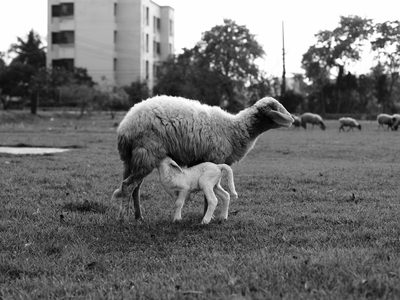
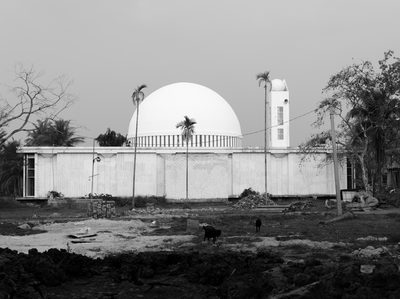
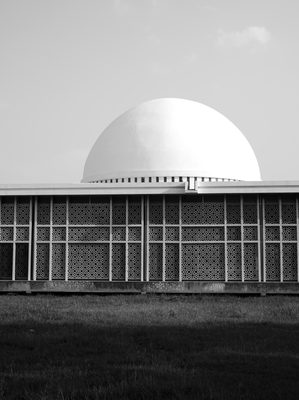
Photos shot on the XF 35mm F1.4 R
We shot and published 22 frames on the XF 35mm F1.4 R, March 2022 to January 2024. Click any thumbnail for the full-size file and its settings on masnun.photos. Every frame is edited, so read them as a record of how the lens renders in use rather than as a resolution test.



















Full specifications
| Focal length | 35 mm |
|---|---|
| 35mm equivalent | 53 mm |
| Maximum aperture | f/1.4 |
| Minimum aperture | f/16 |
| Optical construction | 8 elements in 6 groups |
| Special elements | 1 aspherical element |
| Min. focus distance | 0.28 m |
| Max. magnification | 0.17× |
| Aperture blades | 7 |
| Filter thread | 52 mm |
| Diameter × length | 65 × 50.4 mm |
| Weight | 187g |
| Weather sealing | No |
| Min. operating temp | — |
| Focus drive | DC motor |
| Optical stabilization | No |
| Announced | January 9, 2012 |
Rating breakdown
| Dimension | Score |
|---|---|
| Image quality | 9 / 10 |
| Autofocus | 5 / 10 |
| Handling | 8 / 10 |
| Value | 9 / 10 |
Where to buy
The link below runs an Amazon search for this lens rather than pointing at one listing, because stock and sellers move around. As an Amazon Associate we earn from qualifying purchases — at no extra cost to you.
XF 35mm F1.4 RAmazon · search resultsCompare head-to-head
Sources and further reading
Specs come from the manufacturer. Measured optical behaviour and owner reports are attributed to the people who did the work:
Still choosing?
If you are weighing this against the other small primes, the lens picker ranks them against how you actually shoot. If the body is still open too, start with the camera quiz.