Voigtländer Ultron lens · announced May 15, 2023
Voigtländer Ultron 27mm F2 X review
27 mm · f/2 · 120 g · 6 elements in 4 groups
Verdict
A 120g all-metal manual-focus pancake built by Cosina for X mount only, with electronic contacts, a focus tab, ten straight aperture blades, and 25 cm close focus. One stop faster than Fujifilm's own 27mm pancake, with rendering the Fujicron primes do not have — and no autofocus, ever.
Photographers who want the deliberate, set-the-camera-first way of shooting a rangefinder-style prime on a small Fuji body, and who value rendering and build over autofocus and sealing.
In detail
The Voigtländer Ultron 27mm F2 X is the lens you buy when you have decided that autofocus is not the point. Cosina builds it in Japan for X mount only — not an adapted rangefinder lens with a bayonet glued on the back, but a native design with electronic contacts, a distance scale, a focus tab, and no focus motor of any kind. Cosina announced it on May 15, 2023 and shipped it that June at ¥73,000, and it has been all over r/fujifilm sample threads ever since. Cosina's first X-mount lens was the Nokton 35mm F1.2 X in 2021, and the Ultron follows the same recipe.
The numbers are small. Six elements in four groups with one extra-low-dispersion element and no aspherical glass, ten straight aperture blades, 25 cm minimum focus, a 43 mm filter thread, 59.3 × 23.5 mm, 120g on the spec sheet and closer to 114g on a scale without the hood. The aperture ring clicks in third stops from f/2 to f/22. A thin screw-in metal hood and a metal cap for it come in the box. On APS-C the 27 mm gives a 40 mm-equivalent view and a 53.7° angle of view — a little tighter than the 35 mm-equivalent framing of the X100 cameras and Fujifilm's 23 mm primes, a little wider than a 50 mm normal lens.
I shot mine through a monsoon week on two bodies: an X-E5, which has in-body stabilisation, and an X-T30 III, which does not. The electronic contacts matter more than they sound like they should. The camera knows the lens is mounted, so focus peaking, focus check magnification, the distance display, and IBIS all work, and the aperture you set on the ring gets written into EXIF. On the X-T30 III I ended up shooting almost everything at f/8 and zone focusing, and the hard infinity stop on the focus ring is what made that practical — the barrel stops dead at infinity instead of turning past it, so you can set the lens by feel and stop looking at it.
Optically it is a lens with a point of view. Fred Miranda's measured comparison on an X-Pro3 found the centre at f/2 slightly ahead of the XF 23mm F2 R WR on contrast, with the Fuji pulling clearly ahead in the extreme corners and improving faster as it stops down; the Voigtländer keeps improving out to f/8, where the corners finally close most of the gap. Because there is no aspherical glass, specular highlights come out clean with no onion rings, and because the ten blades are straight rather than rounded you get defined ten-point sunstars from about f/2.8 — something no Fujifilm autofocus prime will do until you are down at f/11 or smaller. Coma is visible at f/2 in night cityscapes, mostly gone at f/2.8, and finished by f/4.
The one thing that catches people out is not optical. After a Fujifilm firmware wave around May 2024, several newer bodies started writing f/22 into EXIF regardless of the aperture set on the ring. Fred Miranda confirmed it on the X-T5 and X-T50 and reported it absent on the X-T30 II, X-E4, and X-Pro3, and as of his last update neither Cosina nor Fujifilm had answered him about it. Worth knowing before you buy, though I did not see it: every frame off my X-E5 and X-T30 III carried the aperture I actually set.
Pros and cons
What we like
- Sharp in the centre from f/2, with short focus falloff and clean specular highlights.
- All-metal build, third-stop aperture clicks, and a focus tab with a hard infinity stop.
- Ten straight blades give defined ten-point sunstars from around f/2.8.
- Electronic contacts: EXIF, focus peaking and check, distance display, IBIS, X-Pro3 parallax correction.
- 25 cm minimum focus at a 40 mm-equivalent view — close enough for detail work.
The rendering is the reason to own it. Focus falls off quickly and the transition from sharp to soft is short, so subjects sit forward in the frame in a way the clean Fujicron primes do not quite manage. At the 25 cm minimum focus it goes nearly smooth, and between roughly 0.7 m and 2 m you get the outlining in specular highlights that gives Voigtländer glass its reputation. It is sharp in the centre from wide open, so there is no aperture where the lens suddenly becomes good — it starts good.
Build quality is on a different level from anything else at this size. All metal, engraved and painted distance markings, an aperture ring with real detents in third stops, and a focus helicoid with the kind of damping that makes you turn it for no reason. Jay Massie described the focus ring as "as smooth as a buttered jellyfish with just enough resistance for precise and accurate control," which is a strange sentence that is also exactly right.
Flare resistance is excellent, which follows from a six-element design with modern multi-coating. I shot straight into a low sun on a bridge at f/8 and got the sunstar with no veiling haze and no ghosting worth mentioning. Distortion is mild pincushion, and both it and the vignetting are corrected automatically by the lens profile in Lightroom and in-camera, so the files you actually work with are clean.
And it stays small. 120g on a 445g X-E5 is 565g for the whole camera, and the barrel sticks out less than the grip on most bodies. A 43 mm filter and the supplied hood can both be fitted without vignetting, which owners on the DPReview forums confirmed early on.
Trade-offs
- No autofocus, and a short focus throw that compresses everything past a few metres.
- Corners lag the XF 23mm F2 R WR wide open and only catch up around f/8.
- No weather sealing on a lens people mount to sealed X-Pro and X-T bodies.
- Post-2024 firmware on some Fuji bodies writes f/22 into EXIF instead of the set aperture.
- Around $600 — roughly 1.5× Fujifilm's own autofocusing 27mm pancake.
There is no autofocus, and there is no version of this lens that will ever have it. Fuji's manual focus aids carry most of the load — peaking, focus check, digital split image, the focus meter — and the tab makes zone focusing quick once your finger learns it. But anything that moves unpredictably is a different kind of shooting, and you will miss frames you would not have missed with a Fujicron.
The focus throw is about 100 degrees, and because so much of it is spent on the 25 cm to 1 m range, everything from a few metres to infinity is compressed into a small sweep. One DPReview owner sold his copy over exactly this, saying precise focus between about eight feet and infinity was "extremely difficult" and going back to the XF 16mm and 35mm F2 pair. Zone focusing at f/8 sidesteps the problem; wide-open work at middle distances does not.
Corners are the weak spot wide open. Against the XF 23mm F2 R WR the Voigtländer trails clearly at the extreme edges at f/2 and needs f/8 to get close. A side-by-side against the XF 27mm F2.8 R WR posted to r/fujifilm landed in the same place — the Fuji looked brighter and more even edge to edge, the Voigtländer sharper in the middle and softer at the edges, with different colour. If you shoot landscape at 27 mm and pixel-peep the corners, the Fuji pancake is the better tool.
No weather sealing, which is the complaint that comes up in every forum thread about it, and it is a fair one on a lens people buy for X-Pro and X-E bodies that are sealed. And the EXIF aperture bug on post-2024-firmware bodies is unresolved as far as any public statement goes, with owners working around it in Lens Tagger or exiftool.
Then there is the price. Around $600 for a manual lens, against roughly $399 for Fujifilm's own 27mm pancake with autofocus and sealing, and less than that for the Viltrox 27mm. You are paying for the metal, the extra stop, the rendering, and the way it makes you work.
Who is this for
Buy the Ultron if you want the shooting experience as much as the pictures. It suits people who already own a small Fuji body and keep looking at X100 content, who shoot street, travel, and everyday documentary work at a 40 mm-equivalent view, and who are happy to set the camera first and wait for the picture. On an X-Pro3 it adds parallax correction in the optical finder and a hard infinity stop that lines up properly, which is about as close as X mount gets to a rangefinder.
Skip it if you photograph children, dogs, or anything else that will not hold still, if you need weather sealing, or if your work is landscape at this focal length where the corners matter. The XF 27mm F2.8 R WR is smaller, sealed, autofocusing, and cheaper, and it gives up a stop and the rendering to get there. The XF 23mm F2 R WR is the better all-round lens by most measurable standards, at nearly twice the weight and a wider field of view.
If you shoot a body without in-body stabilisation, plan around it. On my X-T30 III the lens was fine at f/8 in daylight, but there is no optical stabiliser and no shutter-speed floor the camera can enforce for you. On an X-E5, X-T5, X-S20, or any other IBIS body, the sensor is working while you turn the ring, and that changes what you can hand-hold at dusk.
My advice, if you do buy one: leave it on the camera for a month before you go back to autofocus. The first week is clumsy. By the second, your finger knows where the tab is, and you are picking the focus point on purpose instead of correcting whatever the camera chose.
Sample photos
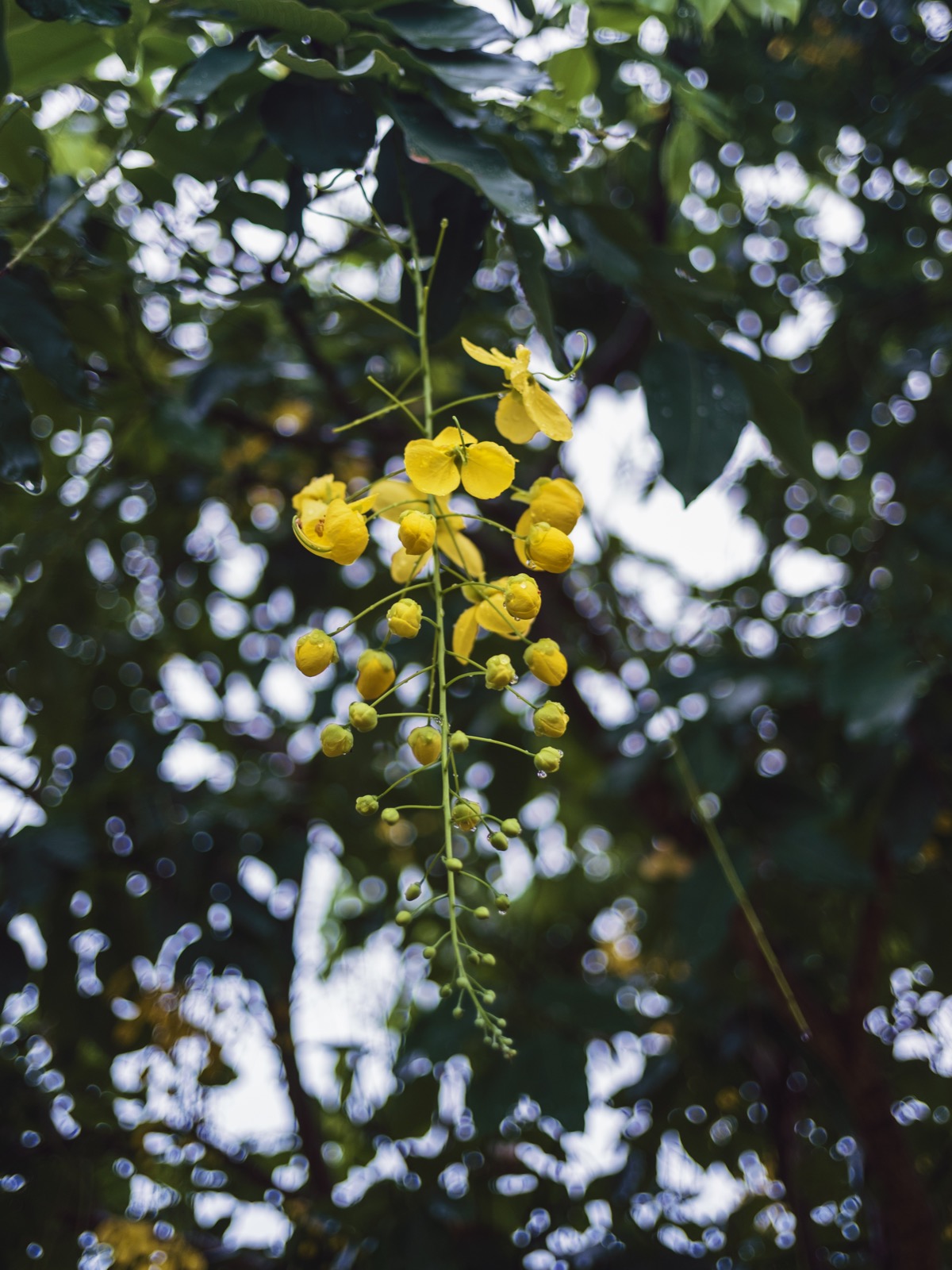
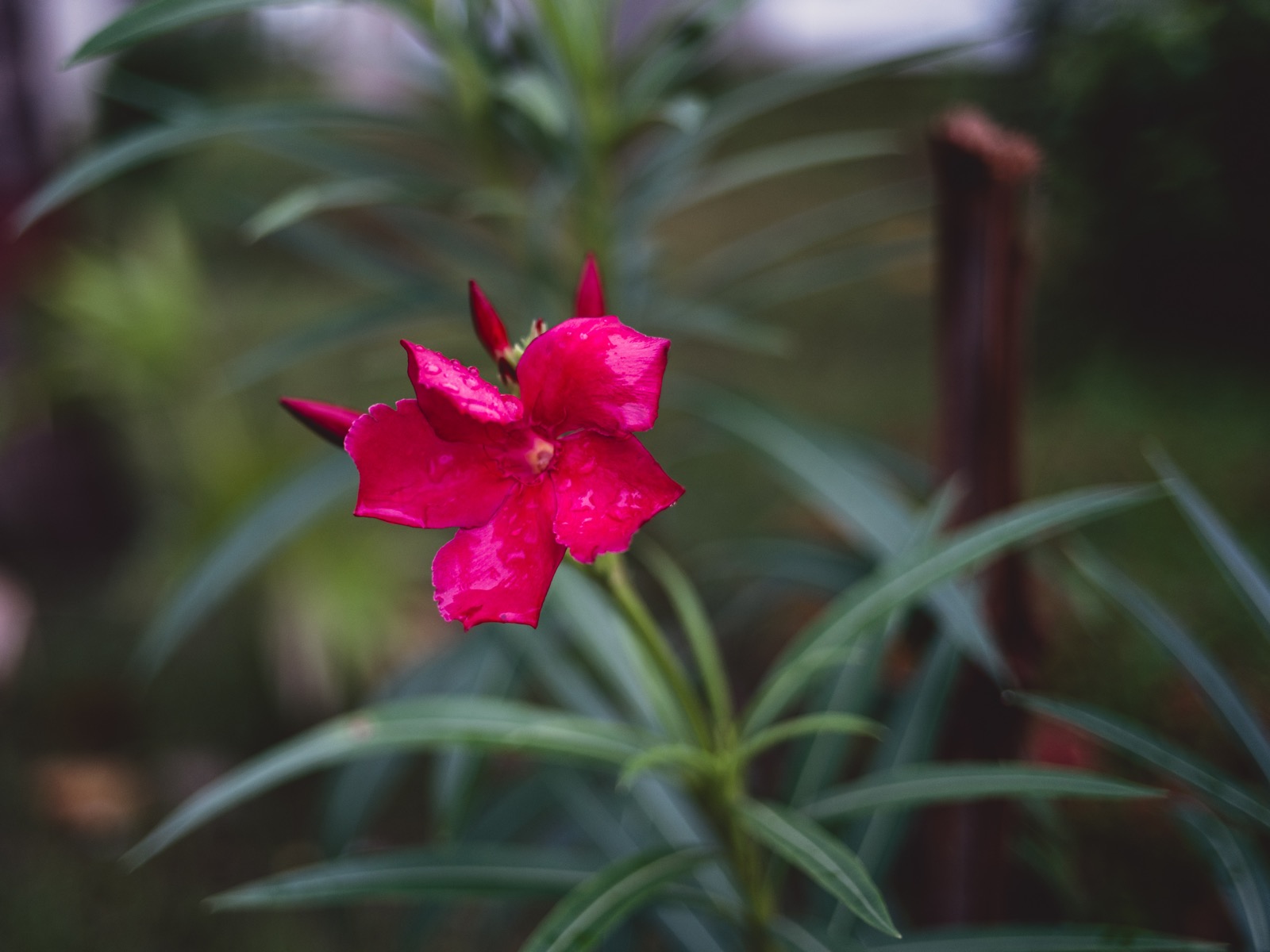
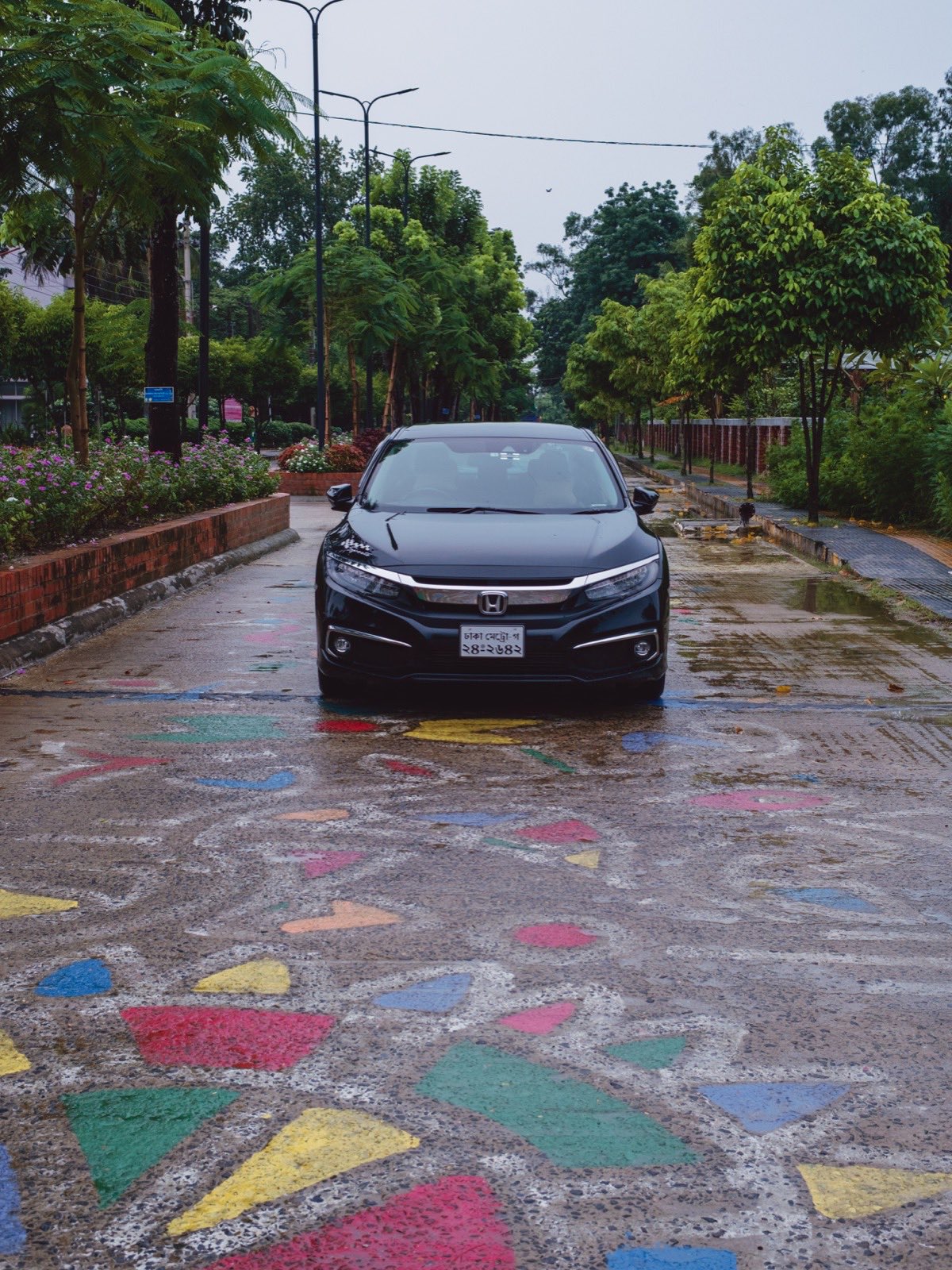
Every frame below was shot on the Ultron 27mm F2 X by us. Settings come from the EXIF the lens wrote into the file. Images are resized for the web and processed in Lightroom, so treat them as rendering references rather than resolution tests. Frames with a link open on masnun.photos, where the full-size file lives.








Full specifications
| Focal length | 27 mm |
|---|---|
| 35mm equivalent | 40 mm |
| Maximum aperture | f/2 |
| Minimum aperture | f/22 |
| Optical construction | 6 elements in 4 groups |
| Special elements | 1 extra-low-dispersion element, no aspherical glass |
| Min. focus distance | 0.25 m |
| Max. magnification | 0.15× |
| Aperture blades | 10 |
| Filter thread | 43 mm |
| Diameter × length | 59.3 × 23.5 mm |
| Weight | 120g |
| Weather sealing | No |
| Min. operating temp | — |
| Focus drive | Manual focus only |
| Optical stabilization | No |
| Announced | May 15, 2023 |
Rating breakdown
| Dimension | Score |
|---|---|
| Image quality | 9 / 10 |
| Focusing | 7 / 10 |
| Handling | 9 / 10 |
| Value | 7 / 10 |
Where to buy
The link below runs an Amazon search for this lens rather than pointing at one listing, because stock and sellers move around. As an Amazon Associate we earn from qualifying purchases — at no extra cost to you.
Ultron 27mm F2 XAmazon · search resultsCompare head-to-head
Sources and further reading
Specs come from the manufacturer. Measured optical behaviour and owner reports are attributed to the people who did the work:
- Our longer write-up: shooting the X-E5 with the Voigtländer 27mm f/2
- Voigtländer — 27 mm F2.0 Ultron X product page (specs and camera-communication notes)
- Fred Miranda — Voigtlander 27mm f/2 Ultron X-mount review (measured resolution, distortion, coma, sunstars, EXIF bug)
- Tudor Mateescu — Voigtländer Ultron 27mm f/2 X review
- Morten Byskov (5050 Travelog) — Voigtländer Ultron 27mm f/2 X review
- Michael (I Like Calculus) — "My favorite pancake lens"
- Jay Massie — Voigtländer Ultron 27mm f/2 Fuji-X mount review
- DPReview forums — "Opinions on VG 27mm f2 ULTRON" (focus-throw complaints, filter and hood fit)
- r/fujifilm — owner threads, sample sets, and the XF 27mm f/2.8 side-by-side
Still choosing?
If you are weighing this against the other small primes, the lens picker ranks them against how you actually shoot. If the body is still open too, start with the camera quiz.